
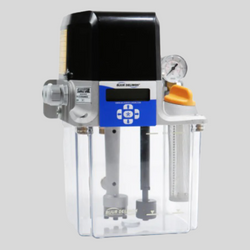
Bijur Delimon Lubrication Pumps
Bijur Delimon lubrication pumps provide the reliable heart of automatic lubrication systems by delivering controlled volumes of oil or grease to machine lubrication points. These pumps help ensure precise lubrication delivery, reduce maintenance labor, and extend equipment life across industrial machinery.
What Are Lubrication Pumps?
Lubrication pumps are the core components that pressurize and deliver lubricant from a reservoir into a centralized system of tubing and injectors or meter units. They can be configured for oil or fluid grease and are often paired with controllers and monitoring devices for automated lubrication schedules.
Where Lubrication Pumps Are Used
Industrial lubrication pumps are widely used wherever multiple lubrication points require consistent, repeatable lubrication during machine operation. Typical applications include:
- CNC machining and milling centers
- Extrusion presses and forming machinery
- Conveyor systems and material handling lines
- Packaging and assembly automation
- Heavy production equipment with multiple bearings and guides
Types of Lubrication Pumps
Different pump types serve different system needs:
- Electric lubrication pumps – Best for systems needing consistent pressure and automated control.
- Pneumatic lubrication pumps – Driven by compressed air; good for rugged or air-powered plants.
- Manual lubrication pumps – Suitable for small systems or low-frequency lubrication points.
- Hydraulic or mechanical pumps – Tied to machine motion when lubrication must synchronize with operations.
When to Use Lubrication Pumps
- Machines with many lubrication points that are difficult or unsafe to service manually
- Systems requiring precise timing or volume control
- Stations that run continuously or at high cycle rates
- Environments needing reduced downtime and consistent machine performance
When Pumps Alone May Not Be Enough
- Very simple systems with one or two lubrication points may not need central pumps
- Hand greasing may suffice for low-duty, infrequently maintained equipment
- Systems needing advanced monitoring or automated fault response should pair pumps with controllers
How Lubrication Pumps Work (Conceptual)
Lubrication pumps draw oil or grease from a reservoir and pressurize it for distribution into tubing and metering components. In automated systems, pumps are controlled by timers or feedback signals (pressure, cycle, low-level switches) to deliver lubricant precisely and consistently. Effective pump selection ensures lubrication occurs at the right rate without overgreasing or starved points.
Common Mistakes and Misapplications
- Selecting a pump that is undersized for the number of lubrication points
- Ignoring lubricant type compatibility (oil vs fluid grease)
- Failing to integrate with monitoring or controllers for reliable operation
- Assuming manual greasing can reliably replace automated systems
How Lubrication Pumps Fit into Larger Systems
Pumps serve as the central driver in a broader lubrication system. They connect to: distribution components (fittings, tubing, junctions), meter units and injectors (which regulate flow to each point), and controllers or monitoring devices (which schedule and verify lubrication). Correct integration ensures lubricants reach every critical point the machine requires.
Benefits of Bijur Delimon Lubrication Pumps
- Precise and consistent lubrication delivery
- Reduced unplanned machine downtime
- Lower maintenance labor costs
- Improved machine reliability and component life
- Cleaner plant environment with software-controlled lubrication
Frequently Asked Questions
What is the difference between electric and pneumatic pumps?
Electric pumps provide electrically driven, consistent pressure and are ideal for automated systems, while pneumatic pumps are driven by compressed air and suit environments where air power is available or preferred.
Can a lubrication pump work with both oil and fluid grease?
Some pumps are configurable for both oil and fluid grease; compatibility depends on pump design and injector selection within the lubrication system.
Do pumps require controllers?
Controllers add timing and monitoring intelligence so that lubrication happens at appropriate intervals and can signal faults, improving system reliability and reducing maintenance oversight.
Related Components and Pages
- Automatic Lubrication Fluid Systems
- Injectors and Meter Units
- Distribution Components
- Controllers and Monitoring Devices
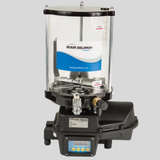
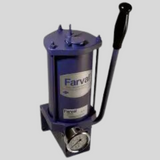
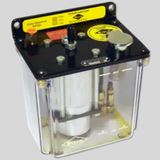
-

Bijur Delimon SFX2PBSNNNAXD 2 Liter, Plastic Reservoir, PDI, Standard Level Monitoring, Pressure switch (N/O) + Pressure gauge, Standard filler cap,Terminal block + Momentary Switch, 2 x cable glands, 200/230 VAC
Bijur Delimon
MSRP: $791.17$719.97Bijur Delimon SureFire II – 2 Liter PDI Lubricator | 200/230 VAC | Terminal BlockL. Dewitt's SKU #: SFX2PBSNNNAXD | Mfr Part #: SFX2PBSNNNAXDThe Bijur Delimon SureFire II (SFX2PBSNNNAXD) is a self-contained, motor-driven gear pump engineered...SFX2PBSNNNAXDMSRP: $791.17$719.97 -

__11618.1775156792.png?c=2 "Bijur Delimon 41320-3NF Multiport Lubricator, 110V, 2L Reservoir (41320-3NF)")
Bijur Delimon 41320-3NF Multiport Lubricator, 110V, 2L Reservoir
Bijur Delimon
MSRP: $1,802.46$1,640.24Bijur Delimon MultiPort Lubricator — 41320-3NF Grease · 110 VAC, Single Phase · 2L (4 lb) Plastic Reservoir · 3 Independent Outlets The Bijur Delimon MultiPort Lubricator (41320-3NF) is a rugged,...41320-3NFMSRP: $1,802.46$1,640.24 -

Bijur Delimon 34819 | TM-5 Pump, 115/230VAC, Single Line Resistance, Level Switch
Bijur Delimon
MSRP: $910.14$796.37Lubricator is a motor-driven piston pump spring discharge type. Pump cycle is controller by an integral gear reduction in the motor. Lubricator can be actuated manually by raising and releasing the instant feed button.MSRP: $910.14$796.37 -

__71013.1772482346.png?c=2 "Bijur Delimon 71800-C6MJ Lubricator SFX6L-ZEM 115V PDI Timer")
Bijur Delimon 71800-C6MJ Lubricator SFX6L-ZEM 115V PDI Timer
Bijur Delimon
MSRP: $1,681.06$1,529.76Bijur Delimon SureFire II – 6 Liter PDI Lubricator | 100/115 VAC | On/Off TimerL. Dewitt's SKU #: 71800-C6MJ | Mfr Part #: 71800-C6MJThe Bijur Delimon SureFire II (71800-C6MJ) is a self-contained, motor-driven gear pump engineered for...71800-C6MJMSRP: $1,681.06$1,529.76 -
__87251.1744833781.png?c=2 "SKA881 LUB PROG 6QT OIL")
Bijur Delimon SKA881 Lubricator, Pneumatic Reciprocating, Grease & Oil
Bijur Delimon
MSRP: $1,292.02$1,175.7585582-2MSRP: $1,292.02$1,175.75 -
__88967.1744833781.png?c=2 "SKA881 LUB PROG 2.5QT OIL") MSRP: $1,216.70$1,107.20
MSRP: $1,216.70$1,107.20 -
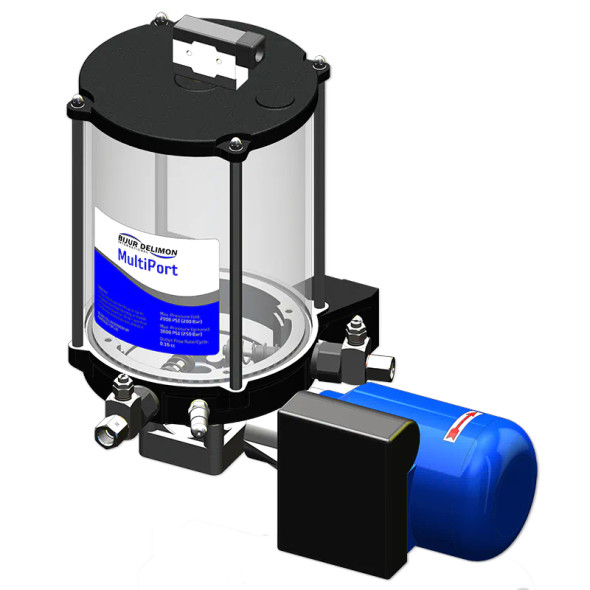
__71840.1750706104.png?c=2 "Bijur Delimon 41320-2NF Multiport Lubricator, 110V, 2L Reservoir, Low-Level Switch (41320-2NF)")
Bijur Delimon 41320-2NF Multiport Lubricator, 110V, 2L Reservoir, Low-Level Switch
Bijur Delimon
MSRP: $1,660.55$1,511.09Bijur Delimon MultiPort Lubricator — 41320-2NF Grease · 110 VAC, Single Phase · 2L (4 lb) Plastic Reservoir · 2 Independent Outlets The Bijur Delimon MultiPort Lubricator (41320-2NF) is a rugged,...41320-2NFMSRP: $1,660.55$1,511.09 -
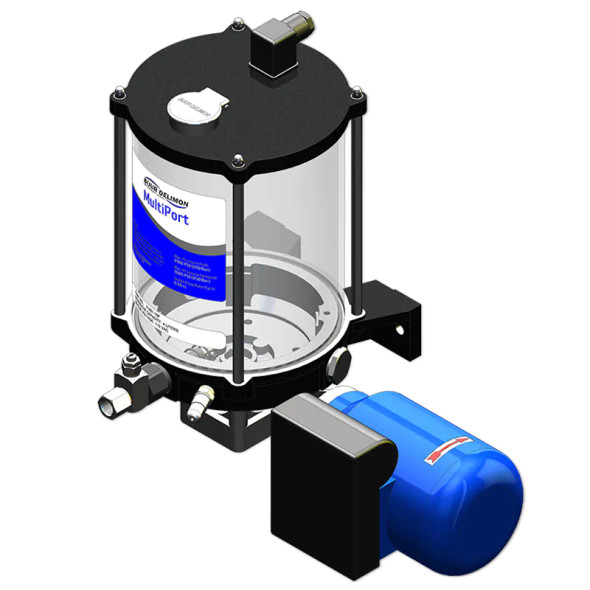
__27640.1750705906.png?c=2 "Bijur Delimon 41320-1NFO Multiport Lubrictor, 110VAC, Single Phase, 2L (41320-1NFO)")
Bijur Delimon 41320-1NFO Multiport Lubrictor, 110VAC, Single Phase, 2L
Bijur Delimon
MSRP: $1,215.90$1,106.47Bijur Delimon MultiPort Lubricator — 41320-1NFO Oil · 110 VAC, Single Phase · 2L (4 lb) Plastic Reservoir · 1 Independent Outlet The Bijur Delimon MultiPort Lubricator (41320-1NFO) is a rugged,...41320-1NFOMSRP: $1,215.90$1,106.47 -
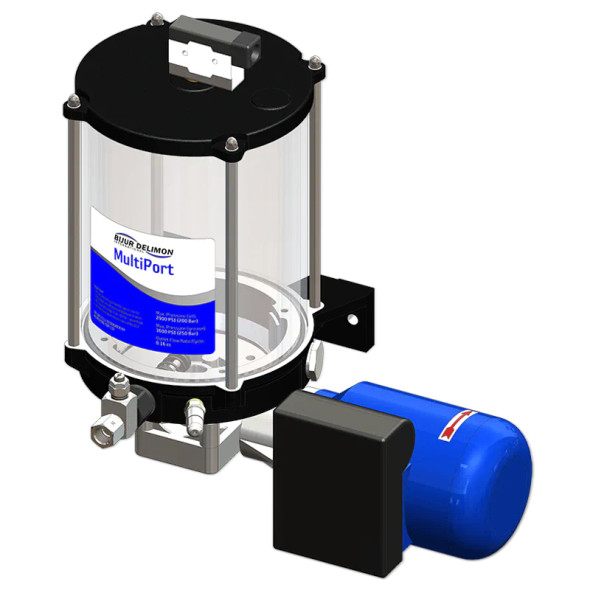
__25513.1750705755.png?c=2 "Bijur Delimon 41320-1NF Multiport Lubricator, 110VAC, Single Phase, 2L Reservoir (41320-1NF)")
Bijur Delimon 41320-1NF Multiport Lubricator, 110VAC, Single Phase, 2L Reservoir
Bijur Delimon
MSRP: $1,258.47$1,145.21Bijur Delimon MultiPort Lubricator — 41320-1NF Grease · 110 VAC, Single Phase · 2L (4 lb) Plastic Reservoir · 1 Independent Outlet The Bijur Delimon MultiPort Lubricator (41320-1NF) is a rugged,...41320-1NFMSRP: $1,258.47$1,145.21 -
__23940.1744833448.png?c=2 "DPG LUB PNEUM DUALINE 24V SOL") MSRP: $5,485.99$4,992.25
MSRP: $5,485.99$4,992.25 -
__14470.1745420766.png?c=2 "DYX 4L PRG 12V CTRL MOBILE")
Bijur Delimon 37555 Dynamis Maxx, 4L PRG 12V CTRL Mobile
Bijur Delimon
MSRP: $3,019.12$2,780.7637555MSRP: $3,019.12$2,780.76 -
__36846.1745420766.png?c=2 "DYX 8L PRG 24V W CONTROLLER")
Bijur Delimon 37554 Dynamis Maxx, 8L PRG 24V W Controller
Bijur Delimon
MSRP: $2,623.77$2,416.6337554MSRP: $2,623.77$2,416.63
