

Bijur Delimon Controllers & Monitoring

Controllers
The SC400 Controller offers dual zone lubrication control plus automatic reservoir fill.
SS2200 Remote Controller optimizes single/dual line systems.
Explore our compact SMDC and SMAC controllers with programmable time or cycle/monitoring features. Elevate control options.
Monitoring
Introducing the advanced Bijur Delimon DS405 lubrication monitor, compatible with our SC400 controller and Lube Point Monitors. It can also seamlessly integrate with your machine's controller or PLC.
This product category is completed by cycle switches, low level switches, pressure switches, and pressure gauges.

Controllers and monitoring devices from Bijur Delimon are essential components in automatic lubrication systems. They provide timing control, system feedback, fault detection, and integration with machine automation so lubricant is delivered accurately, consistently, and safely to every lubrication point.
What Are Controllers and Monitoring Devices?
Controllers are the decision engines of a lubrication system—they determine when and how often lubrication events occur and monitor system health. Monitoring devices provide real-time feedback such as pressure confirmation, cycle verification, low lubricant level detection, and fault alerts. Together they help machines stay protected without constant human supervision.
Where These Devices Are Used
These components are widely used in industrial environments where reliability and precision matter. Common applications include:
- CNC machines and machining centers
- Progressive and dual-line lubrication systems
- Automated production lines
- Presses, conveyors, and forming equipment
- Systems that require synchronized lubrication with machine cycles
Why Controllers and Monitoring Matter
In automated lubrication systems, timing and verification are key to preventing under- or over-lubrication. Simple controllers schedule lubrication events, while advanced controllers can monitor pressure, cycle counts, and integrate machine signals. Monitoring devices alert maintenance teams before failures or dry conditions cause downtime.
Common Types of Controllers & Monitoring Devices
- Timer-based controllers – Schedule lubrication at fixed intervals.
- Pressure feedback controllers – Confirm pressure build-up before delivery.
- Cycle input controllers – Sync lubrication with machine cycles.
- Low-level monitoring – Detect reservoir depletion.
- Fault and warning relays – Integrate with machine PLC or alarm systems.
When to Use Controllers & Monitoring
- Machines with multiple lubrication points requiring controlled timing
- Systems where lubricant loss, pressure loss, or missed cycles cause damage
- High-duty equipment operating continuous or long shifts
- Production environments that require automated integration and fault reporting
When Basic Timing May Be Enough
- Simple systems with predictable, low-risk lubrication needs
- No requirement for feedback or integration with automation
- Low-duty machines where manual supervision is acceptable
How Controllers & Monitoring Improve Reliability
Controllers manage when lubrication happens, and monitoring devices confirm it happened correctly. Together they:
- Prevent dry running by detecting low lubricant levels
- Stop over-lubrication by confirming delivery and pressure
- Integrate with machine controls for synchronized operation
- Provide early alarms for maintenance action before failures occur
Common Mistakes and Misapplications
- Choosing a controller without feedback capabilities when pressure monitoring is needed
- Failing to integrate monitoring signals into machine safety systems
- Over-relying on timers in systems where cycle synchronization is critical
- Ignoring low-level warning signals until a failure happens
Benefits of Bijur Delimon Controllers & Monitoring Devices
- Higher uptime through reliable lubrication scheduling
- Reduced maintenance emergencies via early fault detection
- Better integration with automation and PLC systems
- More consistent lubrication delivery across points
- Support for complex multi-zone or multi-pump systems
Frequently Asked Questions
What does a lubrication controller do?
A lubrication controller sets the timing and conditions for lubricant delivery, managing pumps and verifying successful delivery with feedback devices.
Why is monitoring important?
Monitoring devices confirm that lubricant is flowing, pressure is reached, or lubricant levels are adequate before and after lubrication events, helping avoid machine damage and unexpected downtime.
Can these devices integrate with machine PLCs?
Yes. Many controllers and monitoring devices include fault and warning relays to communicate with machine control systems or plant automation for synchronized lubrication and fault handling.
Related Components
- Automatic Lubrication Pumps
- Injectors and Meter Units
- Distribution Components
- Complete Fluid Systems
-

__77433.1744833278.png?c=2 "CNTRLR SM-DC 12/24VDC EXT R2")
Bijur Delimon 33346ME Controller SM-DC,12/24VDC EXT R2
Bijur Delimon
MSRP: $459.24$417.91Bijur Delimon - Mobile Lubrication Controller: 12/24VDC, External Terminal Strip, SMDC R2 L. Dewitt's SKU #: 33346ME | Mfr Part #: 33346ME Technical Specifications Input Voltage 12/24VDC Connection Type External...33346MEMSRP: $459.24$417.91 -
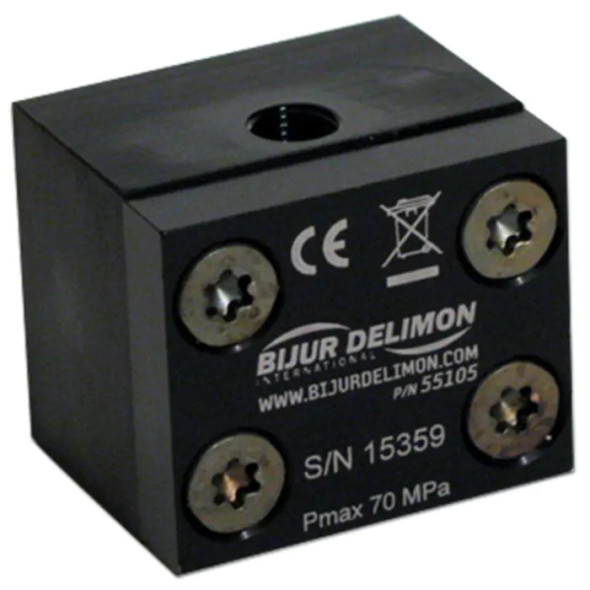

Bijur Delimon 55105 | Lube Point Monitor
Bijur Delimon
MSRP: $309.15$281.33The Bijur Delimon 55105 Lube Point Monitor provides precise confirmation that lubricant has successfully reached critical points in centralized lubrication systems. Using a dual-magnet oval-gear design, it converts every flow pulse into an electrical...BDI55105MSRP: $309.15$281.33 -

__50746.1751484792.png?c=2 "Bijur Delimon 42012-5 Controller SMAC-MAX 110VAC R2 (42012-5)")
Bijur Delimon 42012-5 Controller SMAC-MAX 110VAC R2
Bijur Delimon
MSRP: $1,011.60$920.56Bijur Delimon Controller: SMAC-MAX 110VAC R2 L. Dewitt's SKU #: 42012-5 | Mfr Part #: 42012-5 Technical Specifications Controller Type SMAC-MAX Input Voltage 110VAC (Single Phase) Environmental...42012-5MSRP: $1,011.60$920.56 -

__16459.1751484887.png?c=2 "Bijur Delimon 42012-4 Controller SMAC-MAX 220VAC R2 (42012-4)")
Bijur Delimon 42012-4 Controller SMAC-MAX 220VAC R2
Bijur Delimon
MSRP: $1,011.60$920.56Bijur Delimon Controller: SMAC-MAX 220VAC R2 L. Dewitt's SKU #: 42012-4 | Mfr Part #: 42012-4 Technical Specifications Controller Type SMAC-MAX Input Voltage 220VAC (Single Phase) Environmental...42012-4MSRP: $1,011.60$920.56 -

__35994.1751485270.png?c=2 "Bijur Delimon 33346E Controller SM-DC 12/24VDC INT R2 (33346E)")
Bijur Delimon 33346E Controller SM-DC 12/24VDC INT R2
Bijur Delimon
MSRP: $473.59$430.96Bijur Delimon - Mobile Lubrication Controller: 12/24VDC, IP67 Rated, SMDC R2 L. Dewitt's SKU #: 33346E | Mfr Part #: 33346E Technical Specifications Input Voltage 12/24VDC IP Rating IP67 (Liquid...33346EMSRP: $473.59$430.96 -
__04586.1745420521.png?c=2 "SC400,CSA APPROVED") MSRP: $3,750.59$3,413.04
MSRP: $3,750.59$3,413.04 -
__58913.1744832751.png?c=2 "SC400 LUB CONTROL W/ 24V RELAY") MSRP: $3,053.35$2,778.55
MSRP: $3,053.35$2,778.55 -

__42856.1744832751.png?c=2 "CONTROLLER 85-265 VAC IP-56")
Bijur Delimon SC400 Controller 85-265 VAC IP-56
Bijur Delimon
MSRP: $2,575.76$2,343.94The SC400 Controller is a full featured lubrication control, offering “two plus one” functionality: Two independent lubrication zones may be programmed with a single controller, plus control of one automatic reservoir fill system. The...SC400MSRP: $2,575.76$2,343.94 -
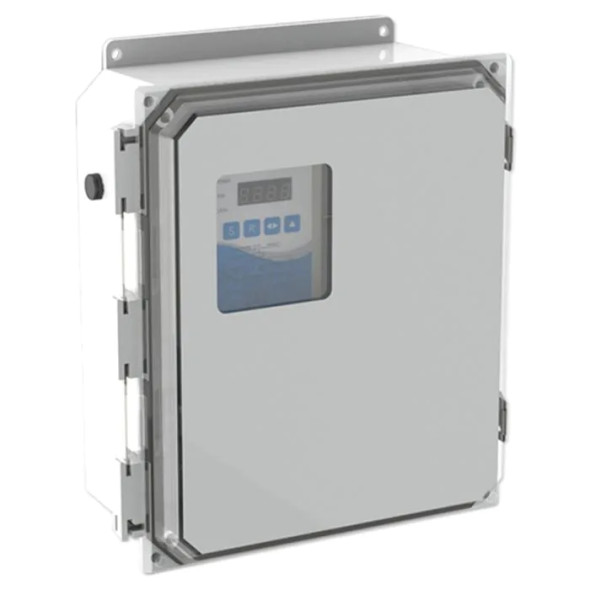
__85879.1751485613.png?c=2 "Bijur Delimon EBPC-24DC EBPC Controller Enclosure with SMDC, 24DC (EBPC-24DC)")
Bijur Delimon EBPC-24DC EBPC Controller Enclosure with SMDC, 24DC
Bijur Delimon
MSRP: $1,848.93$1,682.53Farval’s AC or DC Electric Barrel Pumps can replace the air or hydraulic operated pumps now used for lubrication systems on mobile or stationary equipment. Installation is cleaner - no air or hydraulic lines to install/leak. Simply wire into the...EBPC-24DCMSRP: $1,848.93$1,682.53 -
__38710.1744832442.png?c=2 "CONTROLLER ASSY 220VAC") MSRP: $1,756.48$1,598.40
MSRP: $1,756.48$1,598.40 -
__33314.1744832442.png?c=2 "CONTROLLER ASSY 115VAC") MSRP: $1,756.48$1,598.40
MSRP: $1,756.48$1,598.40
